

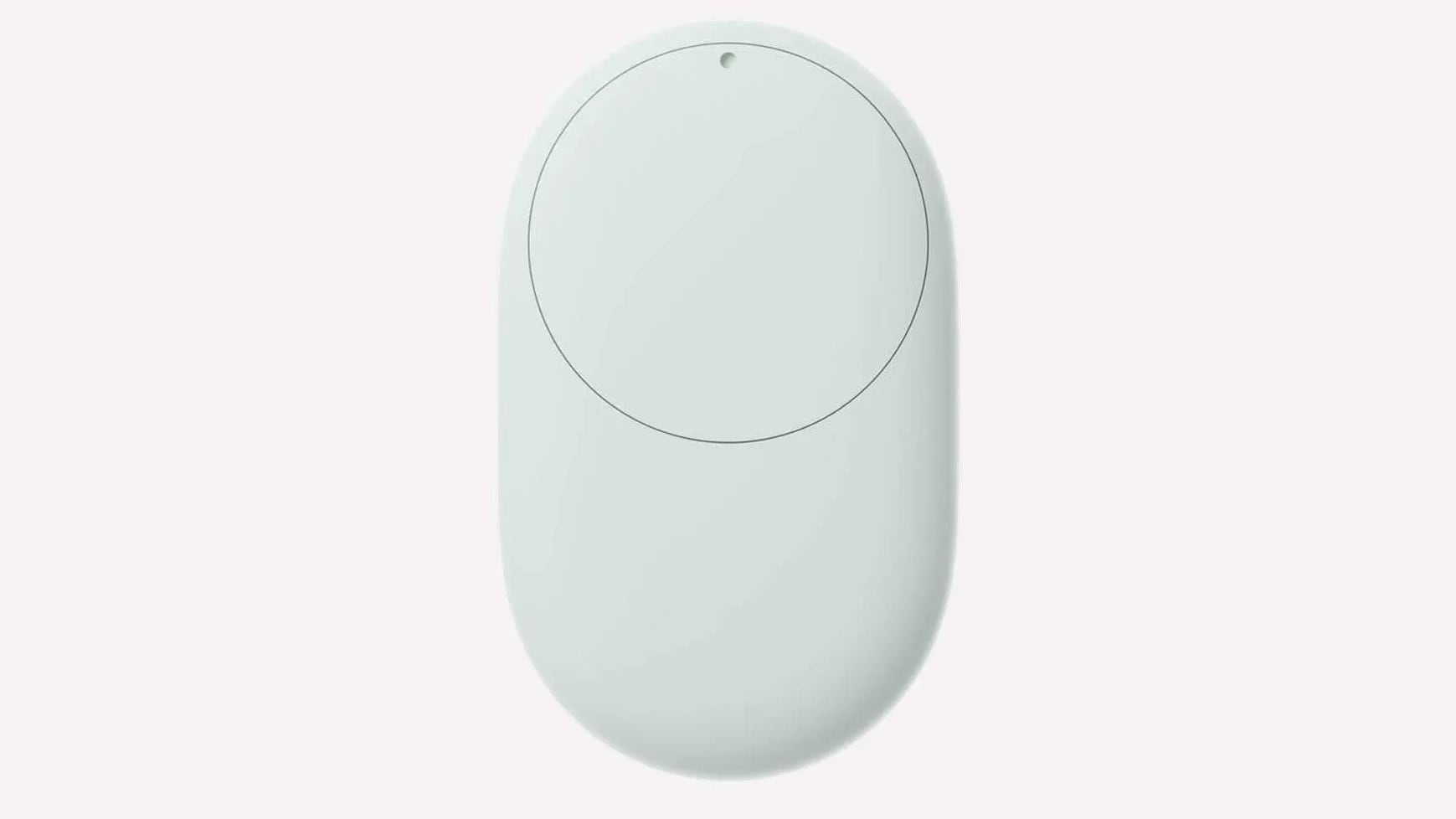
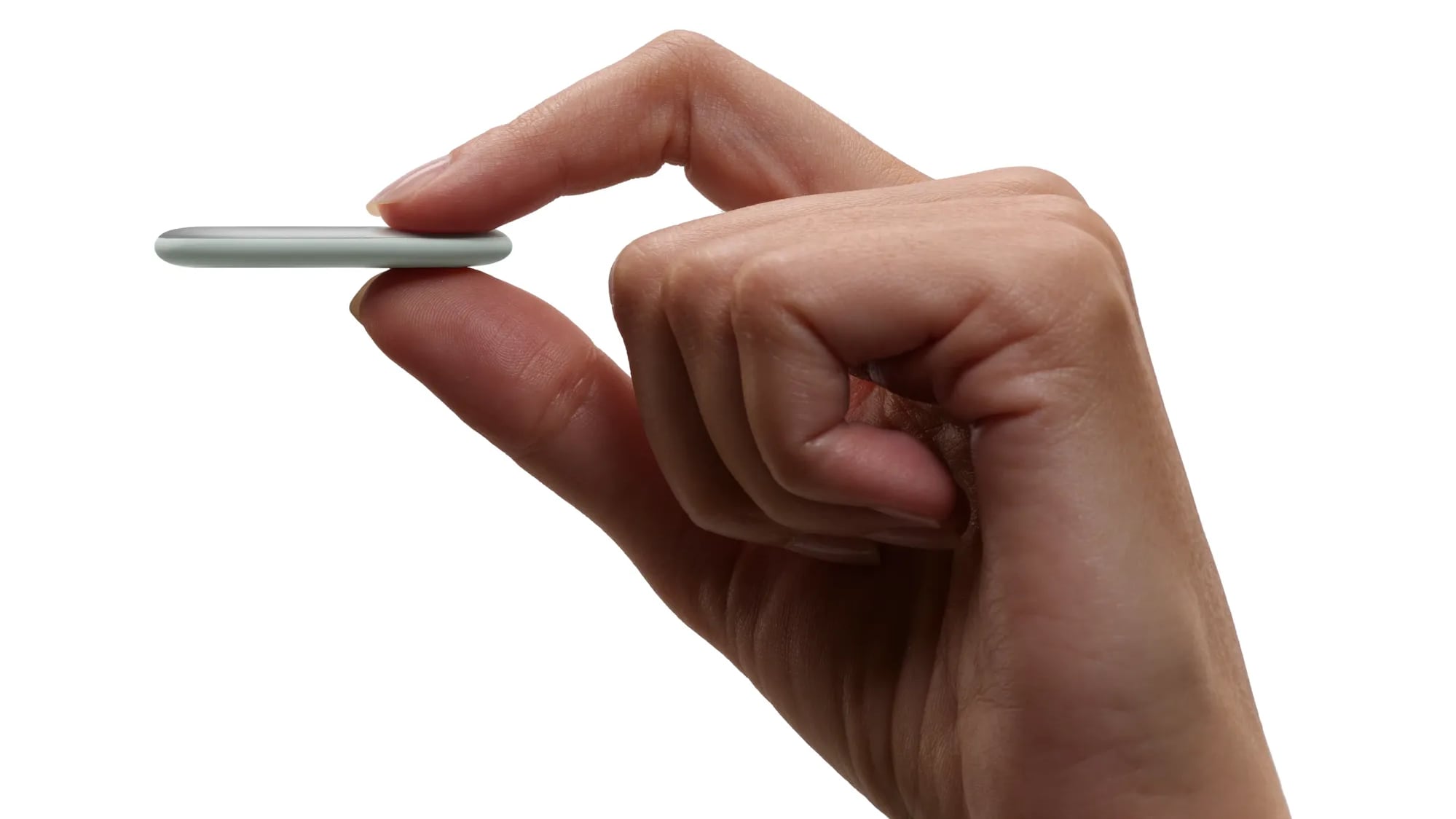
The Pixel Tag is made from stainless steel, and it is IP67 water- and dust-resistant. There's a built-in speaker that can play a sound when an item it's attached to is lost, and a button that causes a sound to play on a connected smartphone. An on-device button is one feature that distinguishes the Pixel Tag from the AirTag.
Pixel Tags have an oval shape instead of a round shape, and they don't come with an attachment point and like the AirTag, require an add-on accessory for adding to keys or bags. Like the AirTag, the Pixel Tag uses a replaceable battery that lasts for up to one year. It works with Android devices running Android 9 or newer with Bluetooth 6, and can be tracked in the Find Hub app.
Google added Bluetooth and Ultra Wideband to the Pixel Tag, so it supports a precision finding feature when an item is lost nearby but out of sight. The Pixel Tag supports many of the same functions as the AirTag, like alerts when an item is left behind and the option to share item location with multiple people.
The AirTag relies on Apple's Find My network when an item is out of range of its owner's device, and Google has a similar system. The Find Hub network taps into more than a billion Android devices for locating items.
Google has the same protections as Apple, and Android devices send alerts when an unknown tag is detected traveling with you. Unknown tracker alerts are cross-platform thanks to a collaboration between Apple and Google, so iPhone users will get an alert if a Pixel Tag is nearby and vice versa.
Google plans to sell Pixel Tags for $29 for one or $99 for four, which is the same price as the AirTag 2. Pixel Tags will launch in November 2026.
Related Roundup: AirTag
Tag: Google
Buyer's Guide: AirTag (Buy Now)
This article, "Google Unveils $29 Pixel Tag to Take On Apple's AirTag" first appeared on MacRumors.com
Discuss this article in our forums

0 comments:
Post a Comment